
10 Apr When “I’m Sorry” Is a Lie
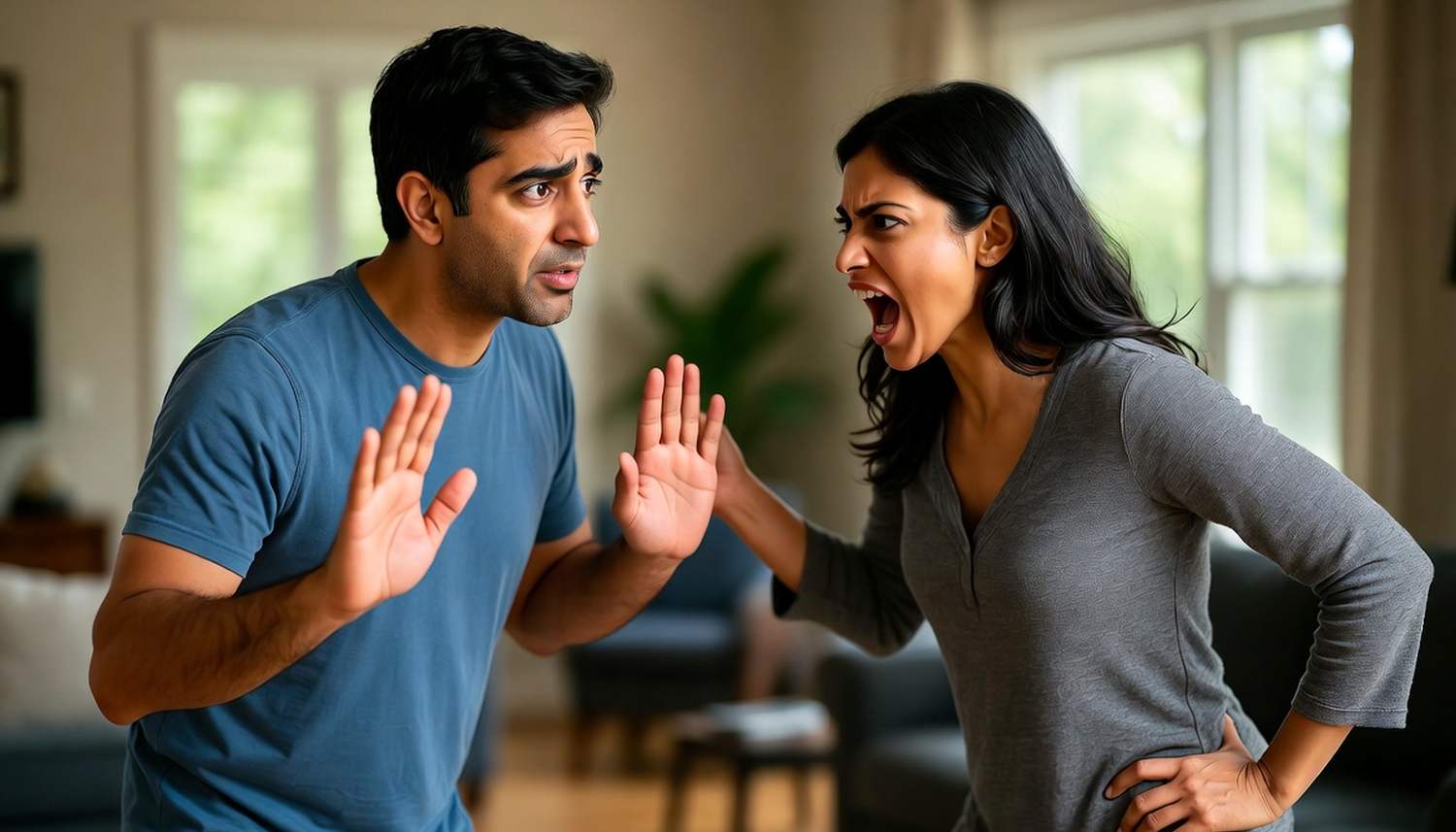
Reading Time – 5 minutes
The concept of apologizing has gotten badly distorted in modern culture. Most people are taught from childhood that saying “I’m sorry” is a social requirement, not a truthful statement. You are expected to say it whether you mean it or not. You are expected to perform remorse on command. And if you do not, people act as if you are the weird one.
A lot of us were trained this way very early. You get into a fight as a kid, you say something sharp or insulting on purpose, and an authority figure immediately steps in and demands an apology. Not because you had a genuine change of heart. Not because you reflected on what happened and felt remorse. But because that is the script. You are supposed to say the words, lower your head, and act like you regret something you absolutely meant to do.
That is not honesty. That is social theater.
If you said something on purpose, and you meant it when you said it, then “I’m sorry” is not technically true. You may later wish the situation had gone differently. You may wish the consequences were less severe. You may even feel bad that the other person is upset. But that is not the same thing as being sorry for the action itself.
That distinction matters more than people realize.
What “I’m Sorry” Actually Means
In a rational world, “I’m sorry” should be reserved for accidents.
You trip and bump into someone. You spill coffee on a stranger. You forget something important. You misunderstand what someone said and respond unfairly. In those situations, “I’m sorry” makes sense because the harm was unintended. You are apologizing for a mistake, an accident, or an error in judgment you did not deliberately choose in the moment.
But when you do something on purpose, the phrase becomes much murkier.
If a man cheats on his wife and then says, “I’m sorry I cheated,” that usually is not true in the literal sense. He made a series of intentional choices. He did not accidentally fall into bed with another woman because he tripped over a rock. He chose it. He wanted it. He did it deliberately. What he might be sorry about is getting caught, hurting her feelings, creating consequences, or damaging the relationship. But he is not sorry in the way culture pretends he should be.
That does not make the behavior moral. It just means people should stop pretending words mean something they do not.
The same logic applies in everyday arguments, especially in relationships.
Why Fake Apologies Damage Relationships
This is where things get very important.
If you say something cruel to a woman you are dating, and you said it because in that moment you genuinely meant it, then a later apology often becomes a lie. Society may expect you to say, “I’m sorry I called you that,” but the more accurate statement is usually something else.
Maybe the truth is, “I was angry and I meant it at the time.”
Maybe the truth is, “I’m sorry I hurt you.”
Maybe the truth is, “I should have handled that differently.”
Maybe the truth is, “I said what I really thought in the worst possible way.”
Those are ugly statements, but at least they are honest.
A fake apology is comforting in the short term because it smooths over the tension. But it does nothing to solve the underlying reality. In fact, it often makes the relationship worse, because now both people are pretending something untrue is true. One person pretends they did not mean it. The other person pretends to believe them. And the actual issue remains untouched.
That is not reconciliation. That is roleplay.
When Names Reveal the Truth
This becomes brutally obvious when name-calling enters a relationship.
If you call your wife, girlfriend, MLTR, or FB a degrading name in the heat of an argument, that is not random. That is not neutral. That is not meaningless. It came from somewhere. It reveals something about how you see her, at least in that moment.
The same is true in reverse.
If a woman calls you an idiot, an asshole, stupid, pathetic, or any other contempt-based label, you should take that very seriously. Especially if it happens more than once. That is not just “anger talking.” Anger does not invent beliefs out of nowhere. Anger reveals them. It strips away politeness and shows you what is underneath.
That does not mean every angry statement is some eternal, perfectly calibrated truth. Human beings are emotional and messy. But it does mean that if someone repeatedly reaches for contempt when conflict hits, then contempt is living somewhere inside that person’s view of you.
And once contempt enters a relationship, the problem is no longer whether someone should apologize. The problem is why you are still together.
“I’m Sorry I Hurt You” Is Different
There is one version of apology that does make more sense in these situations.
You may not be sorry that you felt what you felt. You may not even be sorry that the issue came up. But you can be sorry for the effect your words had. You can be sorry that you handled it badly. You can be sorry that you communicated truth through cruelty.
That is very different from pretending you did not mean it.
For example, if you called someone a name during an argument, the honest version is not, “I’m sorry, I did not mean it,” when you clearly did. The honest version is something more like, “I was angry, and I said that to hurt you. That was a destructive way to handle this.” Now you are actually talking about what happened.
That kind of honesty is uncomfortable, but it creates clarity. Fake apologies create fog.
What Repeated Insults Really Mean
One ugly truth people avoid is that repeated insults in a relationship are usually evidence of deeper incompatibility, not just bad communication.
If a woman consistently calls you names, that is not just a bad habit. It means she sees you through a lens of disrespect or contempt often enough that those words are ready to come out. If you consistently call her names, the same applies in reverse.
At that point, the issue is no longer, “How do we apologize better?”
The issue is, “Why are we with each other?”
Because if that is what you really think of her, why continue?
And if that is what she really thinks of you, why tolerate it?
A healthy relationship is not one where both people constantly say awful things and then patch it over with forced apologies. A healthy relationship is one where those thoughts do not keep surfacing in the first place.
That is the real standard.
The Cultural Problem With Apology
Part of the reason this gets so confused is because modern culture treats apology as a moral magic trick. Say the words, and you are forgiven. Say the words, and everyone gets to move on. Say the words, and the situation is cleaned up.
But words do not erase reality.
If you repeatedly say “I’m sorry” for the same deliberate behaviors, then you are not apologizing. You are laundering your actions through socially acceptable language. You are trying to buy peace without changing the truth.
That is why some relationships get stuck in endless cycles of conflict. One person blows up, says something vicious, apologizes later, and then does it again. The other person accepts the apology because that is what decent people are supposed to do. Then the cycle repeats.
Nothing changes because the apology was never connected to truth.
A Better Standard
A much better standard is honesty.
If it was an accident, say you are sorry.
If it was deliberate, own that it was deliberate.
If you regret the damage, say that.
If your words revealed something ugly but real, deal with the real thing instead of hiding behind social etiquette.
And if someone keeps saying things to you that reveal contempt, believe them.
That does not mean human beings cannot have bad moments. It does not mean every sharp statement means the relationship is over. But it does mean you should stop treating apologies as if they automatically reset the board.
Sometimes the right question is not, “Did they apologize?”
Sometimes the right question is, “Why did they say that in the first place?”
That question matters a lot more.
In the end, “I’m sorry” should mean something. It should not be a ritual phrase used to satisfy cultural programming. It should reflect reality. And if it does not reflect reality, then you are usually better off telling the truth, even when the truth is less comforting.
Because a harsh truth is still healthier than a polite lie.
AI did NOT write this article. The article comes 100% from me and is 100% my content. However, AI was used to transcribe this content from some of my other social media which is why the voice is a little different. It’s still 100% my content and not written by AI. AI will never “write” my content! Remember that you can always go to calebjonesblog.com and subscribe to my Substack if you want articles physically written by me with no AI involvement whatsoever.
Leave your comment below, but be sure to follow the Five Simple Rules.
Daniel
Posted at 11:37 am, 10th April 2026Fantastic article Caleb. What’s the old cliche saying “Love means never having to say you’re sorry” haha yeah right. A long time ago before I learned to handle my emotions better, I used “I’m sorry” a lot in relationships with women. Most of the time it wasn’t because I was actually sorry that I may have hurt the other person, but more so that I was sorry with myself for over reacting or doing something stupid or not behavior congruent with the man I was supposed to be and instead behaving like a kid. I used “I’m sorry” in an attempt to course correct and get myself out of messier situation than it needed to be. For me now a lot of it is about knowing who you are, what your boundaries are, standing on that no matter what and conducting yourself with class. For instance I have a “no name calling” policy in my relationships with women. Even jokingly I don’t like it. Name calling is childish behavior for the school playground not between two grown adults who supposedly care about one another. The first time it happens I make it known that I don’t appreciate it and that they can choose their words better in the future, and if it becomes a thing with them then I’m just going to spend my time with someone who isn’t her. Simple. But you are very right that if there is actual harshness at the root of the name calling than there is a much bigger problem than the words themselves and those two people shouldn’t be together if they can’t resolve whatever that is.
bluegreen
Posted at 01:14 pm, 10th April 2026Good points!
Another aspect of saying sorry in English is that tends to have multiple meanings whereas some other languages people may generally use different words to cover the different scenarios.
Most of the other words for sorry are longer and less fluidly used in casual convo, or they may be too informal. My condolences versus I hear you I feel you etc
For example, if something bad/sad happens to someone, I’ll say I’m sorry to hear that. I’m not apologizing but rather offer my condolences.
Sometimes people will be confused and say you don’t have be sorry, you didn’t do anything.
Since they’re having a rough day, I don’t want to burden them with my theory of languages. I just say oh I meant my condolences I hope things turn out ok.
For example, in Spanish, people will say perdóname or discúlpame to say pardon me but also lo siento to say they feel it. All translate basically to I’m sorry. But they obviously have different meanings etc.
Phero
Posted at 03:18 pm, 10th April 2026Great article.
Want to bring out several pieces and see how you piece them together
In your article about soft nexts, you mentioned instances of when you soft nexted women who called you names. You soft nexted but still reconnected after a period – you didn’t consider them calling you names as grounds for a hard next
In another article, you mentioned that you didn’t care about respect from women, only drama. So long as women you were dating never gave you drama, you didn’t mind even if they disrespected you.
In this article, you say insults should be taken seriously and that if a woman insults you, why are you still together? This contradicts your previous stances on this.
You seemed to emphasize “repeated insults”. Does this mean the first time, perhaps secind time it happens, it can be overlooked? Only when it becomes often should one take it seriously?
How do yourl relate all this into a coherent template?