
24 Apr Why Understanding Female Sexual Cycles Changes Everything in Dating and Relationships
Reading Time – 4 minutes
One of the most misunderstood aspects of male–female dynamics is how differently men and women experience sexual desire over time. This misunderstanding leads to confusion, frustration, and often poor decision-making in both dating and long-term relationships.
At the core of this issue is a simple but critical distinction: men are relatively consistent in their sexual drive, while women are far more cyclical and variable.
If you fail to understand this, much of what you experience with women will seem random or even contradictory. Once you do understand it, patterns begin to make sense.
For most men, sexual desire operates at a relatively stable level.
If you were to map a man’s level of desire on a scale from one to ten, the average healthy man would likely sit somewhere around seven or eight. This baseline does not fluctuate dramatically. There may be small variations depending on mood, stress, or health, but overall, it remains consistent.
Day after day, week after week, the pattern looks almost flat. A slight increase here, a slight decrease there, but always hovering around the same general level.
This consistency shapes how men interpret the world. It creates an expectation that attraction, desire, and sexual interest should remain steady over time.
That expectation becomes a problem when applied to women.
The Female Pattern: Cycles, Phases, and Variability
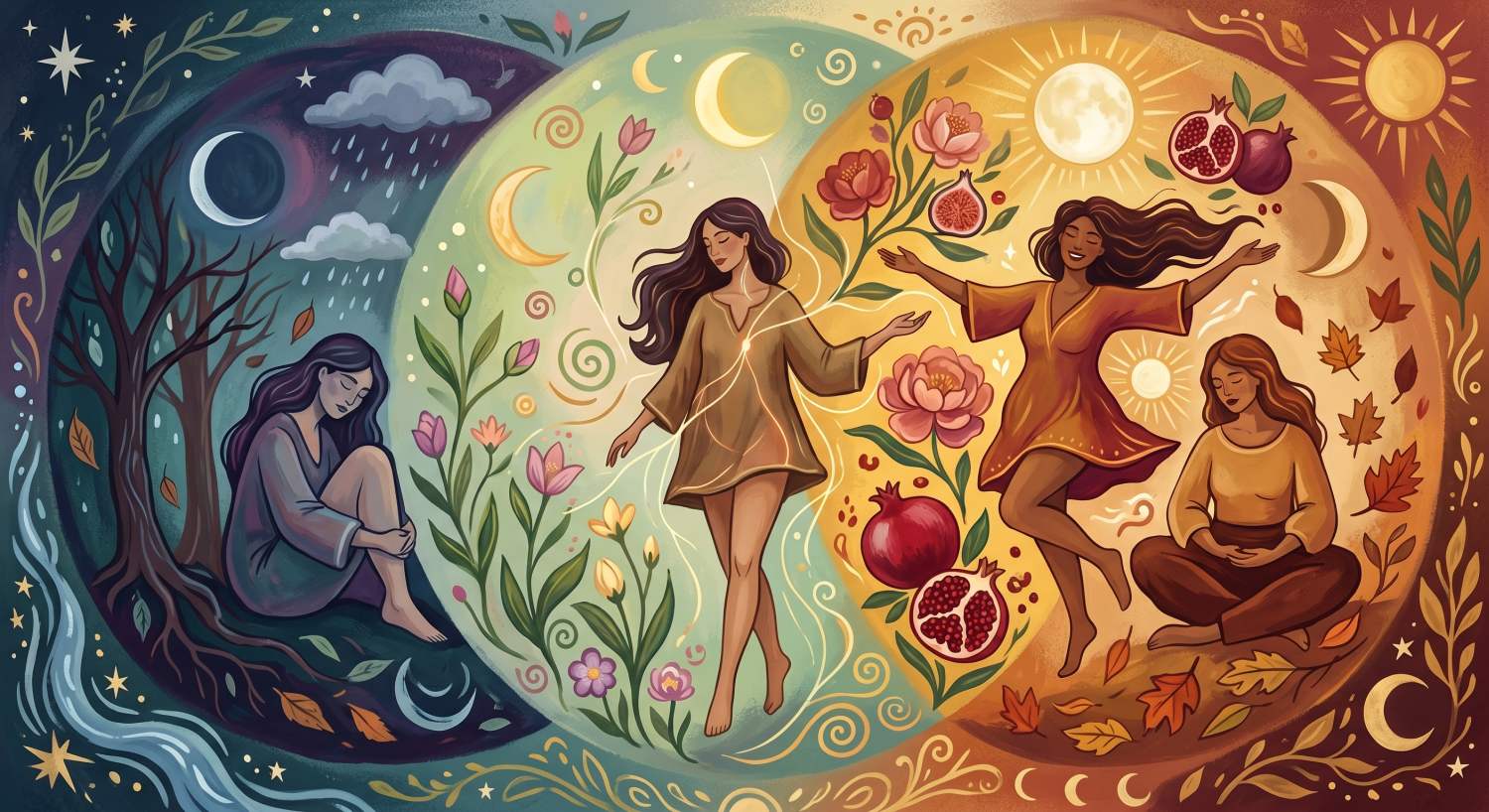
Women do not operate on a flat line. They operate on cycles.
If you were to graph female sexual desire over time, it would not resemble a straight line. It would move up and down in waves, sometimes dramatically.
There are periods when desire is high, sometimes very high. These phases can last for days, weeks, or even longer. Then there are periods when desire drops significantly, sometimes for extended stretches.
This variability is influenced by multiple factors. Biological cycles play a role, but so do emotional states, life circumstances, stress levels, and major life events.
A woman’s level of desire at any given moment is not just about attraction. It is about where she is within a broader cycle.
Life Stages and Shifting Priorities
Beyond shorter-term fluctuations, women often move through broader phases across different stages of life.
There may be periods of exploration and high social activity. There may be phases where priorities shift toward career, education, or personal development. There may be times when emotional or life circumstances reduce interest in dating altogether.
Other periods may bring a renewed focus on relationships, connection, or physical intimacy.
The key point is that these phases are not permanent. They change over time, sometimes gradually and sometimes abruptly.
Two women of the same age can be in completely different phases. The same woman can also shift dramatically from one phase to another within a relatively short period.
Because men are generally consistent, they expect consistency.
When a woman shows strong interest one week and less interest another, it can feel like something has gone wrong. Men often assume they did something to cause the change.
Sometimes that is true, but often it is not.
In many cases, the change is simply part of her natural cycle. Her level of desire has shifted, independent of anything external.
Without this understanding, men tend to overanalyze, overreact, or misinterpret normal fluctuations as rejection or loss of attraction.
How This Plays Out in Dating
When you meet a new woman, timing matters more than most men realize.
If you meet her during a high-interest phase, interactions may feel easy and effortless. Attraction builds quickly, communication flows, and things progress smoothly.
If you meet her during a low-interest phase, the opposite can happen. Even if you do everything correctly, progress feels slow or stalled.
This does not necessarily mean you are doing anything wrong. It may simply mean you have encountered her at a point in her cycle where she is less receptive.
Recognizing this can prevent unnecessary frustration and help you maintain perspective.
These cycles do not disappear once a relationship becomes established.
In long-term relationships, it is common for couples to experience periods of high connection and periods of lower intensity. This applies to emotional and physical dynamics alike.
From a male perspective, this can feel unpredictable. From a female perspective, it is often a natural progression through different phases.
The challenge arises when one partner expects consistency while the other operates in cycles.
Understanding this difference reduces conflict and helps set more realistic expectations.
Adjusting Your Expectations
The most important takeaway is this: do not expect women to behave like men in terms of consistency.
If you approach relationships with the assumption that desire should remain constant, you will constantly feel confused or dissatisfied.
Instead, recognize that variation is normal.
Sometimes things will feel effortless. Other times they will require more patience and understanding. These shifts are part of the dynamic, not necessarily a sign of a problem.
Men and women experience attraction and desire differently, not just in intensity but in rhythm.
Men tend to operate on a steady baseline. Women tend to move through cycles.
Once you internalize this difference, many aspects of dating and relationships become easier to interpret. Situations that once seemed inconsistent or frustrating begin to make sense.
And when you understand the pattern, you can respond more effectively instead of reacting emotionally to every change.
That shift alone can dramatically improve your experience with women over time.
AI did NOT write this article. The article comes 100% from me and is 100% my content. However, AI was used to transcribe this content from some of my other social media which is why the voice is a little different. It’s still 100% my content and not written by AI. AI will never “write” my content! Remember that you can always go to calebjonesblog.com and subscribe to my Substack if you want articles physically written by me with no AI involvement whatsoever.
Leave your comment below, but be sure to follow the Five Simple Rules.
Sebastian
Posted at 11:26 am, 24th April 2026To me, this speaks about the importance of outcome independence in relationships with women. It’s simply not sustainable for long-term happiness to be so dependent on something as fickle as a woman’s mental state and feelings towards you. Although this is easy for me to reason about, it’s hard to internalize on an emotional level, especially when there’s lots of feelings involved in the relationships (as with MLTRs and OLTRs). How does one develop this outcome independence and “stoicism” while still loving one’s women? Is it just a matter of repeated experience/trial and error?
Caleb Jones
Posted at 10:36 am, 25th April 2026I have an entire book about that. It’s called the Unchained Man. Read it. (Or if you’ve read it, read it again.)